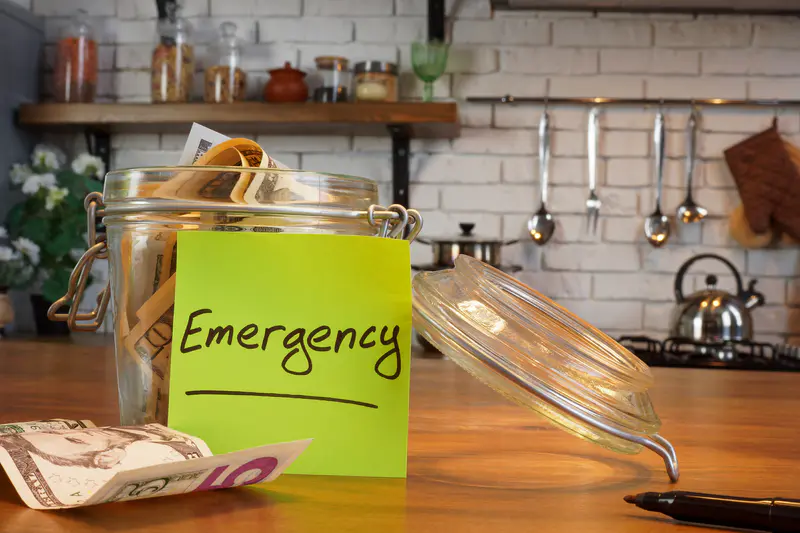
A rental property without a dedicated cash reserve may leave owners more exposed to unexpected expenses and periods of reduced rental income. Everything works fine as long as nothing breaks or your tenant pays their rent on time…every time. The moment something does go wrong, and it always does eventually, you're scrambling to cover the cost.
An emergency fund for your rental property isn't just a luxury reserved for landlords with large portfolios. For many landlords, maintaining an emergency fund is widely regarded as a prudent financial management practice. Building one takes discipline, but the process is straightforward once you commit to it.
Why Your Personal Emergency Fund Isn't Enough
A lot of landlords, especially those with one or two properties, treat their personal savings as the backup plan for rental expenses. That approach works until it doesn't. A $4,000 HVAC replacement on your rental property shouldn't come out of the same account that's protecting your family from a job loss or a medical emergency. Those are separate risks that deserve separate reserves.
Mixing personal and rental finances also creates accounting headaches. When tax time arrives and your accountant asks you to separate personal expenses from rental expenses, commingled funds make that process much more complicated. A dedicated rental property reserve keeps the finances clean and makes it clear at any point exactly how much cash you have available.
There's also a psychological benefit to separation. When the rental reserve is its own account with its own balance, you can see at a glance whether you're adequately prepared for the unexpected. When it's blended into your personal savings, you lose that visibility and tend to overestimate how much is available.
Maintaining dedicated reserves is widely regarded as a prudent part of property ownership. Freddie Mac also encourages homeowners and property owners to plan for unexpected maintenance and repair costs by setting aside emergency savings to help manage financial disruptions.
How Much You Need
Many financial professionals recommend maintaining a reserve equivalent to three to six months of operating expenses, although the appropriate amount depends on the property's condition, cash flow and the investor's risk tolerance. Operating expenses include your mortgage payment, property taxes, insurance, average monthly maintenance costs, and any HOA or management fees. Add those up for one month and multiply by three to six.
For a property with a $1,500 monthly mortgage, $200 in taxes, $100 in insurance, $150 in average maintenance, and a $150 management fee, the monthly operating cost is roughly $2,100. A three-month reserve is $6,300. A six-month reserve is $12,600.
Where you land within that range depends on the age and condition of the property, as well as your personal risk tolerance. An older property with aging systems needs a larger reserve because the likelihood of a major repair is higher. A newer property with a long-term tenant and relatively new mechanicals can operate comfortably at the lower end.
If you have a property management company, ask them to run a cost analysis to better understand exactly how much you should keep in your emergency fund for each specific property. They’ll be able to make educated suggestions that fit your market.
How to Fill Your Emergency Fund
If you're starting from zero, building a full reserve takes time. The goal is to get there through consistent contributions over several months or years.
The best thing you can do is set aside a fixed percentage of monthly rental income before you count anything as profit. Treating the reserve contribution as a non-negotiable operating expense is the only way to get serious about it. There's rarely extra money in rental property ownership – only money you've allocated on purpose.
A common starting approach is 10 to 15 percent of gross monthly rent directed into the reserve account. On a property generating $2,000 per month in rent, that's $200 to $300 going into the reserve each month. At that rate, you reach a $6,000 reserve in 20 to 30 months. That’s not fast, but if this is an investment you plan to hold for decades, it’s worth taking the time to get there.
Keep the fund in a high-yield savings account (HYSA) that's separate from your personal accounts and your operating account. You want the money accessible within a day or two for genuine emergencies, but a HYSA can at least help the money grow and fight inflation.
The Consumer Financial Protection Bureau also recommends maintaining emergency savings in an accessible account so funds are available when unexpected expenses arise, helping reduce reliance on high-cost borrowing during financial emergencies.
What Counts as an Emergency
You need to define what qualifies as an emergency withdrawal before there’s ever an emergency. Otherwise, everything will feel urgent and you’ll slowly deplete your fund on things that don’t really matter.
Generally speaking, emergencies are things that require you to spend money with a week or less of notice. These are things that impact your tenant’s health or safety (or the integrity of the property). For example:
● A failed HVAC system in the middle of the summer
● A water heater that stops working
● A mold issue in the bathroom
● A surprise tax bill
● A property that sits empty for several months while you look for a tenant
Knowing what actually counts as an emergency is crucial. It helps protect your emergency fund and keep you profitable.
Setting Yourself Up for Success
A rental property emergency fund is one of the least exciting aspects of real estate investing. It requires you stash thousands of dollars away in something that generates almost no return. But do you know what it does give you? Margin and peace of mind. It helps you protect your investment and sets you up for long-term success. A well-funded reserve can help landlords manage unexpected costs, maintain cash flow and support the long-term performance of their investment properties.