For decades, the symbols of success were easy to identify.
A larger house. A faster car. A corner office overlooking a city skyline. Luxury was visible, tangible, and often designed to be noticed.
Today, something subtle is changing.
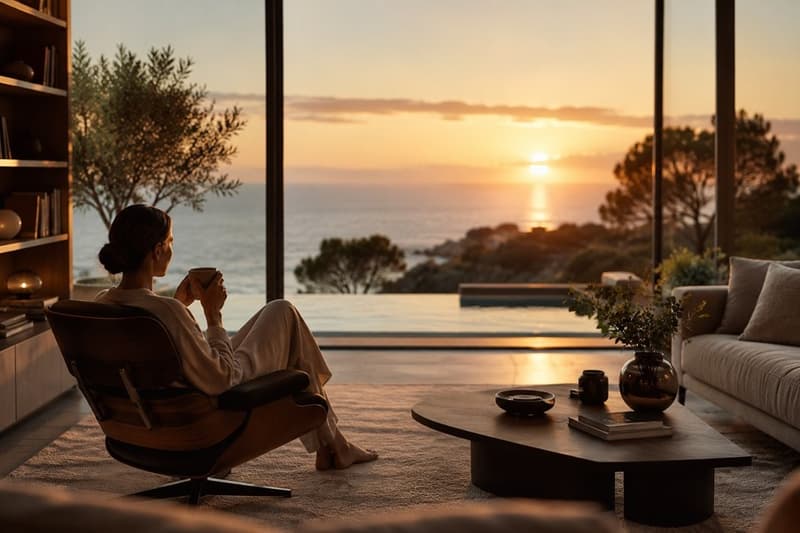
Across cities, industries, and generations, a growing number of people are redefining what it means to live well. While financial success remains important, the conversation around wealth is becoming more nuanced. Increasingly, the most desirable assets are not things that can be displayed. They are experiences that can be felt.
Time. Flexibility. Peace of mind. Freedom from constant urgency.
In many ways, modern prosperity is shifting from accumulation to control. The ability to choose how one spends a day is becoming just as valuable as the ability to purchase something expensive.
This transformation is not happening through a grand social movement. It is unfolding quietly, in daily decisions made by professionals, entrepreneurs, families, and even corporations.
The result is a fascinating question: has time become the ultimate luxury?
The End of the Productivity Era
For much of the twentieth century, productivity was celebrated as an unquestionable virtue.
The more hours worked, the more ambitious a person appeared. Long schedules were often treated as proof of importance. Being busy became a badge of honour.
However, research increasingly suggests that constant busyness may not always lead to better outcomes. Studies from the Organisation for Economic Co-operation and Development (OECD) have repeatedly shown that countries with longer working hours do not necessarily achieve higher productivity levels than those with shorter working schedules.
According to OECD data, some of the world's most productive economies also place greater emphasis on work-life balance and employee wellbeing.
Source: https://www.oecd.org/work-life-balance/
This insight has prompted many professionals to reconsider an assumption that shaped modern careers: that success must always come at the expense of personal time.
Instead, efficiency is replacing endurance as the preferred metric.
Working smarter is no longer a cliché. It is increasingly becoming an economic necessity.
The Rise of Lifestyle Wealth
The traditional understanding of wealth focused primarily on financial capital.
Yet economists and behavioural scientists have long argued that wellbeing depends on a broader set of resources. Financial security matters, but so do health, relationships, purpose, and autonomy.
This broader perspective is gaining traction among younger generations entering the workforce. Surveys conducted by Deloitte consistently show that Millennials and Generation Z place significant value on flexibility, meaningful work, and mental wellbeing alongside compensation.
Source: https://www.deloitte.com/global/en/issues/work/content/genz-millennial-survey.html
What makes this shift particularly interesting is that it does not reject financial success. Rather, it changes the purpose behind it.
Instead of earning more simply to spend more, many individuals are pursuing income as a pathway toward greater freedom.
The dream is no longer exclusively about retirement at sixty-five.
For some, it is the ability to spend afternoons with children.
For others, it is the option to travel without sacrificing career progression.
For many, it is simply the freedom to wake up without feeling trapped by a schedule that no longer serves them.
Lifestyle wealth is not measured by possessions. It is measured by choices.
Why Experiences Continue to Outperform Possessions
One of the most intriguing findings in behavioural economics concerns the relationship between happiness and spending.
Research published by Cornell University suggests that people often derive greater long-term satisfaction from experiences than from material purchases.
Source: https://news.cornell.edu/stories/2014/01/experiences-make-people-happier-possessions
The explanation is surprisingly simple.
Material possessions eventually become familiar. A new car becomes the car. A new gadget becomes another device.
Experiences, however, tend to become part of personal identity. They create stories, memories, and relationships that remain meaningful long after the moment has passed.
A family holiday, a memorable dinner with friends, a challenging hike, or a meaningful cultural experience often continues to deliver emotional value years later.
This does not mean material purchases are unimportant. Comfortable homes and reliable transportation improve quality of life in meaningful ways.
But beyond a certain threshold, people increasingly discover that memories often provide a stronger return than objects.
In financial terms, experiences can sometimes generate a different kind of dividend: one measured in meaning rather than money.
The New Status Symbol Nobody Talks About
Historically, status has always adapted to economic conditions.
In agricultural societies, land signalled influence.
During industrialisation, factories represented power.
In the modern consumer era, luxury goods became visible markers of achievement.
Today, a different status symbol is emerging.
Availability.
Consider the growing admiration for individuals who can step away from work without anxiety, spend meaningful time with family, or pursue personal interests without constant interruption.
These individuals may not necessarily be the wealthiest in traditional terms. Yet they often possess something many others desire.
Control over their attention.
In a world saturated with notifications, deadlines, and endless information, uninterrupted time has become surprisingly scarce.
Scarcity creates value.
And value creates aspiration.
This may explain why concepts such as digital wellness, slow living, and mindful productivity have moved from niche conversations into mainstream culture.
People are not necessarily seeking less ambition.
They are seeking ambition that leaves room for life.
Technology's Unexpected Role
Technology often receives criticism for accelerating the pace of modern life.
There is truth in that observation.
Smartphones, social media platforms, and constant connectivity have undoubtedly blurred the boundaries between professional and personal time.
Yet technology is also enabling the very lifestyle shifts many people seek.
Remote work, cloud collaboration, digital banking, telemedicine, and automation have dramatically reduced the need for physical presence in many areas of life.
A task that once required hours can now be completed in minutes.
A meeting that once required travel can occur instantly.
Administrative processes that once consumed entire afternoons can now happen with a few clicks.
According to data from the World Economic Forum, automation and digital transformation continue to reshape how work is organised, creating opportunities for greater flexibility when implemented thoughtfully.
Source: https://www.weforum.org/agenda/archive/future-of-work/
The challenge is not technological capability.
It is deciding how to use the time that technology creates.
Saving time only becomes valuable when that time is invested meaningfully.
The Financial Value of Peace of Mind
There is another dimension to modern wealth that often receives less attention.
Predictability.
Financial planners frequently observe that many clients are not seeking extraordinary riches. They are seeking certainty.
The ability to absorb unexpected expenses.
The confidence that a medical emergency will not become a financial catastrophe.
The reassurance that retirement remains achievable.
The comfort of knowing that a temporary setback will not derail long-term goals.
This desire for stability has contributed to growing interest in emergency funds, diversified investments, and long-term financial planning.
Research from the Consumer Financial Protection Bureau highlights the strong connection between financial wellbeing and psychological wellbeing.
Source: https://www.consumerfinance.gov/data-research/research-reports/financial-well-being/
The implication is profound.
Money is not valuable solely because of what it buys.
It is valuable because of what it removes.
Stress.
Uncertainty.
Fear.
When viewed through this lens, financial planning becomes less about numbers and more about quality of life.
The Corporate Shift Toward Human Capital
Businesses are also beginning to recognise that modern definitions of success are evolving.
Organisations increasingly compete not only for customers but also for talent.
As a result, employee wellbeing has become a strategic consideration rather than merely a human resources initiative.
Flexible schedules, mental health support, hybrid work arrangements, professional development opportunities, and wellness programmes are now common discussions in boardrooms around the world.
This trend reflects a growing understanding that sustainable performance depends on sustainable people.
Burnout may produce short-term output.
Engagement produces long-term value.
The companies that recognise this distinction often find themselves better positioned to attract and retain skilled professionals.
In other words, the changing definition of personal wealth is influencing corporate strategy as well.
Why the Conversation Matters
Some might dismiss discussions about time, balance, and wellbeing as lifestyle trends.
That would be a mistake.
These shifts reflect deeper economic realities.
As societies become more technologically advanced, productivity gains create opportunities to rethink how people allocate their most limited resource.
Every individual receives the same twenty-four hours each day.
No investment strategy can create more of them.
No promotion can extend them.
No purchase can permanently recover them once they are gone.
This simple truth explains why time continues to rise in perceived value.
The more choices people have, the more carefully they evaluate where their attention goes.
And attention, increasingly, may be the defining currency of modern life.
A Different Kind of Prosperity
Perhaps the most interesting aspect of this transformation is that it is not anti-growth, anti-business, or anti-ambition.
It is about alignment.
People still aspire to build successful careers.
Entrepreneurs still seek opportunities.
Investors still pursue returns.
Businesses still aim to expand.
What is changing is the destination.
Financial success is increasingly viewed as a tool rather than an endpoint.
Its purpose is not merely accumulation.
Its purpose is creating a life that feels intentional.
That may involve travel.
It may involve family.
It may involve creativity, learning, community involvement, or simply having enough space to enjoy ordinary moments.
The specifics differ from person to person.
The underlying principle remains remarkably consistent.
The highest form of wealth is not necessarily having more.
It is needing less while appreciating more.
And in a world where attention is fragmented, schedules are crowded, and expectations continue to rise, that idea may represent one of the most valuable investments anyone can make.
The future of prosperity may not be defined by what people own.
It may be defined by how freely they are able to live.
And that is a form of luxury that never goes out of style.