By Matthew Kayser
Why digital design tools matter in modern electronics engineering.
Modern electronics do a lot more than they used to. Devices are smaller, more connected, and often packed with hardware, software, sensors, and wireless features in a single, compact design. Behind much of that work is a type of software most consumers never see. For engineers asking what ECAD is, the answer begins with how electronic systems are planned, checked, and improved long before a product reaches production. Companies like Dassault Systèmes provide platforms designed to support these workflows.
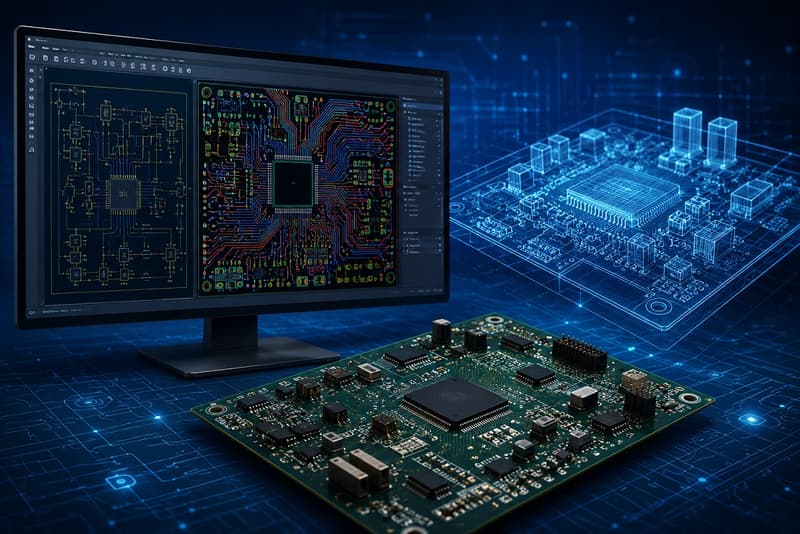
ECAD, or Electronic Computer-Aided Design, is the software that software engineers use to build and organize electronic systems before anything is physically manufactured. Engineers use it to create circuit board layouts, route wiring, and manage the embedded systems in products that most people interact with every day, including phones, vehicles, appliances, and industrial machines.
Devices continue to shrink in size while taking on more features, so tools like these help development teams keep projects moving without losing track of accuracy or design coordination.
Defining ECAD in Product Development
At its core, ECAD software provides engineers with a digital workspace for designing electronic systems. Instead of sketching circuits by hand or relying on one physical prototype after another, teams can test ideas in a virtual environment first.
This process supports a wide range of tasks. Engineers can create schematics, place components on circuit boards, route electrical connections, and test system performance before manufacturing begins.
That kind of visibility matters. Electronic products often include thousands of interconnected components, and a minor layout issue can lead to bigger problems later.
Working through those challenges digitally allows teams to catch potential issues earlier in the process.
Why ECAD and Mechanical Design Need to Work Together
Modern products rarely involve electronics alone. A circuit board still has to fit inside a real device, whether it is a wearable sensor, a vehicle control unit, or a piece of industrial equipment.
Because of this, ECAD systems are often integrated with mechanical CAD (MCAD) platforms. This helps electronic and mechanical engineering teams stay aligned during development, particularly as connected manufacturing systems increasingly rely on integrated digital design environments.
For example, a mechanical designer may change the size of a product housing while the electronics team adjusts component placement to match. Without coordination between the two systems, those changes could lead to fit or clearance problems later.
Integrated workflows help reduce that kind of conflict before production starts.
Improving Accuracy in Circuit Design
One of the biggest advantages of ECAD software is precision. Circuit layouts, wiring paths, and component spacing can all be planned with a level of accuracy that manual methods cannot easily match.
Many ECAD platforms include built-in checking tools that can flag issues such as overlapping spacing, missing connections, or routing paths that may cause problems later.
That gives engineers a chance to work through problems early, while changes are still easier to make. Catching an issue during the design stage is usually far less disruptive than discovering it after a physical board has already been produced.
As products become smaller and more complex, that level of accuracy becomes even more important.
Faster Prototyping and Product Iteration
Building physical prototypes takes time, money, and materials. Not long ago, it was common for engineering teams to go through several rounds of hardware revisions before landing on a version they trusted enough to manufacture.
A lot of that work can now happen before a physical board is ever built. With ECAD software, engineers can experiment with layouts, test circuit responses, and troubleshoot performance issues digitally. That gives teams more room to refine designs without constantly stopping to rebuild hardware.
That flexibility makes it easier to revise a design without starting from scratch. A change that once required hardware rebuilds may now be tested in software first.
For companies developing competitive products, that speed can make a meaningful difference.
Lowering Manufacturing Costs Through Better Design
Design mistakes found late in production can quickly become expensive. A faulty board layout or incompatible component may lead to delays, redesigns, or wasted materials.
That is part of the reason so many engineering teams depend on ECAD during development. It gives them a chance to spot weak points early, make changes more freely, and test ideas before production ever begins. Instead of rebuilding hardware repeatedly, teams can save time and materials by making many of those adjustments digitally.
FAQ
1. What does ECAD stand for?
ECAD stands for Electronic Computer-Aided Design, referring to software used to design electronic systems and components.
2. How is ECAD different from CAD?
While CAD typically focuses on mechanical design, ECAD is specifically used for electronic circuit and PCB design.
3. Why is ECAD important in product development?
It may improve accuracy, reduce errors, and enable faster design iterations for electronic components.
4. Can ECAD integrate with other engineering tools?
Yes, many ECAD systems integrate with mechanical CAD and simulation tools for a more comprehensive design process.
5. Which industries use ECAD the most?
Industries such as electronics, automotive, aerospace, and manufacturing rely heavily on ECAD for product development.