The auto insurance industry is experiencing a technological revolution that promises to reshape how drivers are assessed, priced, and protected.
For decades, insurance companies relied on broad demographic categories and historical accident data to determine premiums. However, artificial intelligence and telematics technology are ushering in an era of greater personalization and data-driven precision.
The Traditional Insurance Model Is Becoming Obsolete
Traditional auto insurance pricing has long been a blunt instrument. Drivers were grouped by age, gender, location, and vehicle type, and then rated based on statistical averages. A safe twenty-five-year-old driver might face a high premium simply because their age group statistically has more accidents.
This meant many cautious drivers effectively subsidized riskier ones. The system worked when insurers had limited data, but it created clear inequities—especially for younger drivers who were often charged prohibitively high premiums regardless of individual behavior.
Enter Telematics: Measuring What Actually Matters
Telematics technology has emerged as a way to correct these inequities. Using plug-in devices or smartphone apps, insurers can monitor real driving behavior—including speed, braking, cornering, acceleration, time of day, and total miles driven.
The value of telematics lies in its ability to measure actual risk: how someone drives, not who they are. A careful young driver can demonstrate safe habits, while an older driver with aggressive tendencies can no longer rely on favorable demographic assumptions.
Major insurers have widely adopted telematics programs such as Snapshot, SmartRide, and DriveEasy. These often provide initial discounts for participation, with further savings possible based on proven safe driving. Insurers offering these programs state that some drivers report savings of thirty percent or more by demonstrating consistent caution behind the wheel.
Artificial Intelligence Takes Personalization Even Further
While telematics captures raw driving behavior, artificial intelligence analyzes it in ways humans cannot. Machine learning tools can examine millions of data points to identify patterns tied to accident risk.
AI can differentiate between emergency hard braking and habitual aggressive braking. It can identify that late-night highway driving poses different risks than rush-hour commuting.
According to experts at Infinity Insurance Agency (InfinityAuto.com), these nuanced distinctions allow insurers to price policies with far greater precision—rewarding genuinely safe drivers and identifying hidden risk factors.
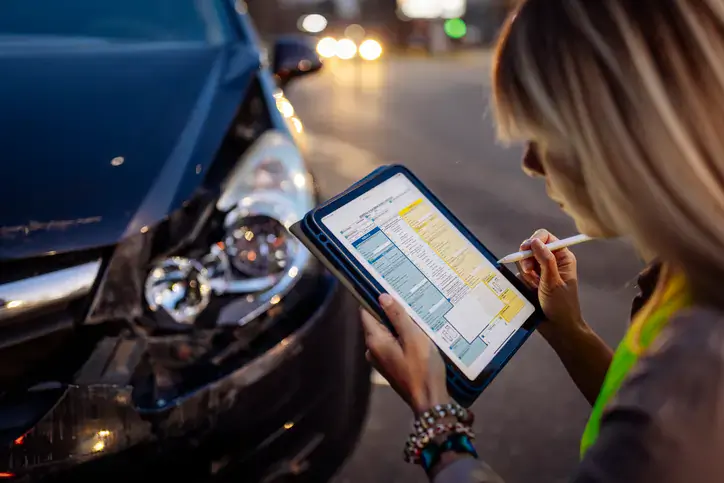
Beyond telematics analysis, AI is also transforming claims processing. Computer vision tools assess vehicle damage from photos within seconds. Natural language processing powers chatbots that handle routine inquiries efficiently. Predictive analytics helps detect potentially fraudulent claims before payouts occur.
The Benefits for Consumers Are Substantial
For careful drivers, these technological advances represent significant opportunity. Instead of subsidizing riskier drivers within their demographic group, safe drivers may finally receive pricing that reflects their real-world behavior.
Insurers say their telematics programs create strong incentives for safer driving. According to participating drivers, many report becoming more aware of habits such as harsh braking, fast acceleration, or speeding—because these directly affect scores and savings.
These technologies also enable new models such as usage-based insurance, where people pay only for the miles they drive. Pay-per-mile policies can be especially beneficial for those who work from home or frequently use public transportation.
Privacy Concerns and Data Security Questions
However, these advances raise serious privacy considerations. Telematics devices track highly detailed location data, creating extensive records of a driver’s daily movements—potentially revealing sensitive personal information, from medical visits to religious activities.
While insurance companies state that telematics data is securely stored and used only for rating purposes, the potential for misuse remains a concern. Could data end up in court subpoenas, be accessed in a breach, or be sold to brokers? Could employers obtain driving scores?
Some drivers also reject the idea of continuous monitoring on principle. As telematics becomes more common, people who decline participation may face higher premiums simply for choosing privacy.
Regulatory Challenges and Fairness Issues
Regulators are still determining how to oversee rapidly evolving AI-based pricing systems. Insurance rating has always been heavily regulated to prevent discrimination, but AI algorithms often operate as opaque “black boxes,” making fairness harder to verify.
There is concern that algorithmic models could unintentionally reinforce inequities. For example, if accident correlations overlap with predominantly minority neighborhoods, it raises ethical questions about how location-based pricing should be handled.
Another challenge is accessibility. Older adults, drivers without smartphones, or those without consistent mobile service may be excluded from the savings telematics can offer—potentially creating new disparities.
Looking Ahead: What Comes Next
Industry analysts expect that auto insurance may continue becoming more personalized, data-driven, and technology-focused. Future systems may integrate additional data sources such as weather conditions, traffic patterns, or even biometric indicators of driver alertness.
Autonomous vehicles will eventually require insurance models that shift liability from drivers to manufacturers or software providers.
Experts predict that while these innovations offer exciting opportunities, they also demand thoughtful consideration of fairness, privacy, and data governance. Achieving balance will require sustained collaboration among insurers, regulators, consumer advocates, and drivers.
The transformation of auto insurance is well underway—and its ultimate direction will depend on how stakeholders navigate the choices ahead.